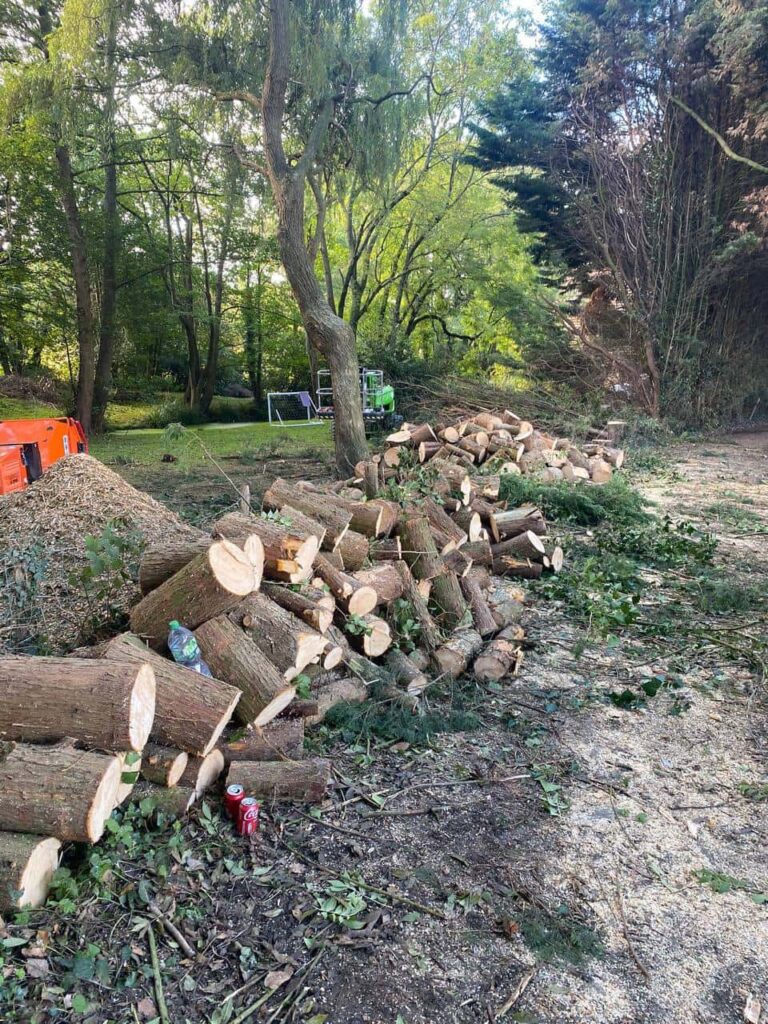
How to Clear a Tree Stump Before Building a Patio
Preparing the Ground Properly for a Stable Patio
A tree stump can prevent a patio from being built on a stable, accurately prepared foundation. Cutting the stump level with the soil may improve the garden’s appearance, but it leaves the main root mass beneath the proposed paving. As the remaining timber decays, it can create voids and allow the patio above to settle unevenly.
For property owners in West Bridgford, Nottingham, professional stump removal or grinding should form part of the preparation process rather than being treated as a separate cosmetic task. The position, size and condition of the stump will determine the most suitable approach.
Assess the Stump and Proposed Patio Area
The stump should be assessed in relation to the complete patio footprint. It is important to establish:
- The stump’s diameter and height
- The likely extent of major surface roots
- Whether the tree has been recently felled
- Whether new shoots are developing
- The depth required for the patio foundation
- Access for appropriate machinery
- The location of nearby structures and garden features
- Whether more than one stump or root system is present
A small stump near the edge of a proposed patio may require a different approach from a large stump positioned directly beneath its centre.
Why Cutting the Stump Flush Is Not Enough
A stump cut close to ground level still occupies the space needed for excavation, sub-base materials and paving. Building directly over it can lead to several problems.
As the stump and roots decay, they lose volume and structural strength. Materials placed above them may then sink into the resulting gaps. This can cause patio slabs to rock, crack or develop uneven levels.
Remaining roots can also obstruct excavation and make it difficult to compact the foundation consistently. Proper clearance is therefore essential even when the stump is no longer visible above the surface.
Choose Between Stump Grinding and Excavation
Stump grinding uses specialist machinery to reduce the stump and accessible roots into small fragments below ground level. It is often suitable where access is restricted or where removing the complete root system would cause unnecessary disturbance.
Full excavation involves removing the stump and a more substantial part of the root mass. This may be appropriate in some situations, although it generally disturbs a larger volume of surrounding ground.
The correct method depends on the stump’s size, position and the intended patio construction. A professional tree surgeon can assess how much material needs to be removed to allow reliable ground preparation.
Grind to a Suitable Depth
For a patio project, the required grinding depth should be considered before work begins. Removing only the visible crown of the stump may not provide enough clearance for the planned excavation and sub-base.
The stump should be ground deeply enough to remove timber from the construction zone. Large lateral roots within the patio footprint may also need attention if they interfere with excavation or could leave unstable material beneath the finished surface.
Clear communication between the tree surgeon and patio installer helps ensure that the cleared depth matches the intended build-up.
Remove Wood Chippings From the Foundation Area
Stump grinding creates a mixture of wood chippings and soil. Although these arisings can be useful elsewhere in a garden, they are not a suitable foundation beneath paving.
Organic material gradually decomposes and reduces in volume. If grinding debris is left within the excavated patio area, it may create soft spots or voids beneath the sub-base.
The loose material should therefore be removed from the construction zone. This allows the resulting cavity to be inspected and filled with appropriate material.
Check for Remaining Roots and Soft Ground
After the main stump has been ground, the surrounding area should be checked for substantial roots, loose soil and hidden pockets of organic material. Roots extending through the proposed patio footprint may need to be removed or reduced where appropriate.
The ground may also be less stable around the former root system, particularly if the tree was large or the stump has already begun to decay. Identifying these areas before the foundation is installed helps prevent uneven settlement later.
Fill and Compact the Resulting Cavity
The hollow left by stump clearance should not be filled with loose topsoil or grinding debris. It needs suitable fill that can be compacted to create consistent support.
Material should normally be placed and compacted in controlled layers rather than filling the entire cavity at once. This reduces the likelihood of hidden voids and helps the repaired area perform more like the surrounding ground.
The patio installer can then prepare the wider formation, sub-base and bedding layer across a stable, even surface.
Allow for Ground Settlement Where Necessary
The appropriate timing for patio construction depends on the extent of disturbance and how the cavity has been reinstated. Correctly placed and compacted material can provide firm support, while loose or recently disturbed soil may continue to settle.
If a substantial root system has been removed, the area should be inspected carefully before paving begins. Proceeding without confirming ground stability can leave the finished patio vulnerable to dips and movement.
Why Professional Stump Grinding Is Valuable
Stump grinding requires suitable machinery and an understanding of how the root flare and surrounding roots are likely to behave. Professional work allows the stump to be reduced efficiently while limiting avoidable disturbance to the rest of the garden.
It also enables the clearance to be planned around the patio rather than simply grinding the stump to a standard depth. This makes the service part of the wider construction preparation and helps create better conditions for the next stage of work.
Plan Stump Clearance Before Patio Installation
Stump work should ideally be completed before excavation and paving materials arrive. This gives both the tree surgeon and patio installer sufficient access and prevents completed groundwork from being disturbed later.
Planning the sequence correctly allows for:
- Assessment of the stump and root system
- Confirmation of the required clearance depth
- Grinding or removal of the stump
- Removal of organic debris
- Inspection of the resulting ground
- Filling and compaction
- Construction of the patio foundation
This coordinated approach reduces the likelihood of delays, rework and uneven support beneath the finished paving.
Conclusion
Clearing a tree stump before building a patio involves more than cutting it level with the soil. The stump and relevant roots must be removed from the construction zone, organic grinding debris cleared away and the resulting cavity filled and compacted correctly. These steps help prevent later settlement, cracked slabs and uneven paving.
If a stump is obstructing a planned patio in West Bridgford, Nottingham, West Bridgford Tree Surgeons can assess its size and position and provide appropriate professional stump grinding. Completing the clearance properly gives the patio installer a more stable area on which to prepare the new surface.
Call us on: 0115 647 1188
Click here to find out more about West Bridgford Tree Surgeons
Click here to complete our contact form and see how we can help with your trees needs.